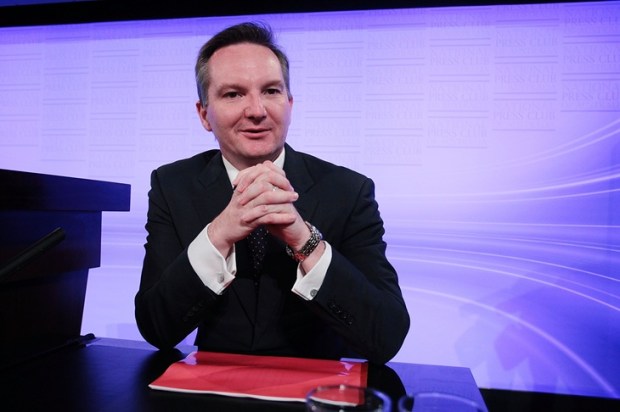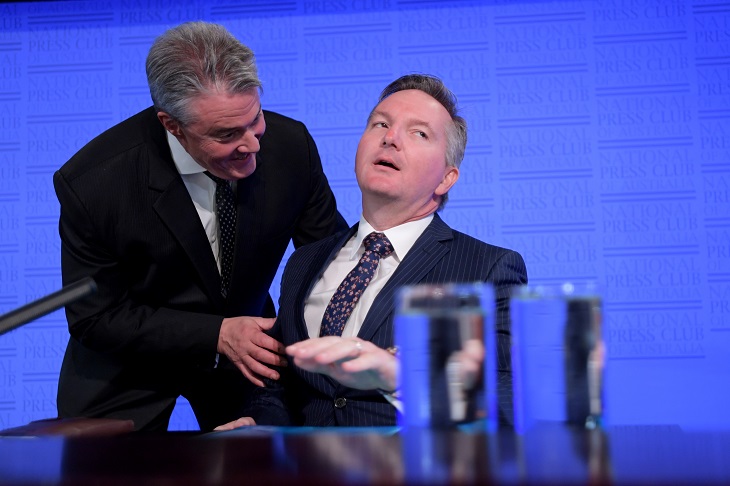
Back in July 2022, Chris Bowen the Minister for Climate Change and Energy, launched the latest CSIRO electricity costs report which says wind and solar are the cheapest forms of electricity supply. He said, ‘This underlines the need for Australia and the world to invest heavily in renewable energy sources to put downward pressure on power prices.’
He continues to call for eliminating coal and gas in Australia, claiming this is necessary to prevent harmful climate change. Climate change was the focus of his September address to the American Australian Association. He said 80 years ago, ‘Curtin and Roosevelt had a rendezvous with destiny. Our job is to avoid a rendezvous with (climate) disaster.’ The Minister also suggested that decarbonisation will provide Australia massive opportunities in our region. But not by any stretch could this replace the $300 billion a year from coal and gas that supplies some 40 per cent of our exports.
Mr Bowen cited bushfires and weather-related disasters as evidence of the need for decarbonisation. Yet, although all tragedies are regrettable, the global cost from these events is low and declining. Roger Pielke shows the overall 2022 death rate from weather and climate disasters was about 0.14 people per million, representing one of the 5 lowest annual death rates in more than a century of data.
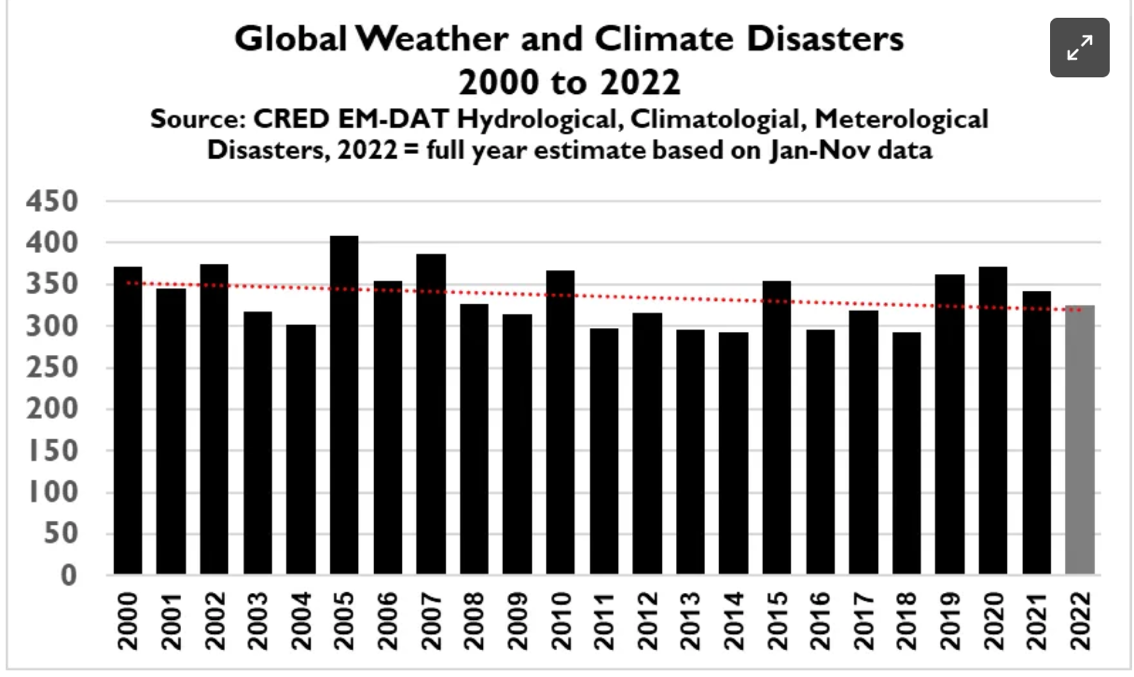
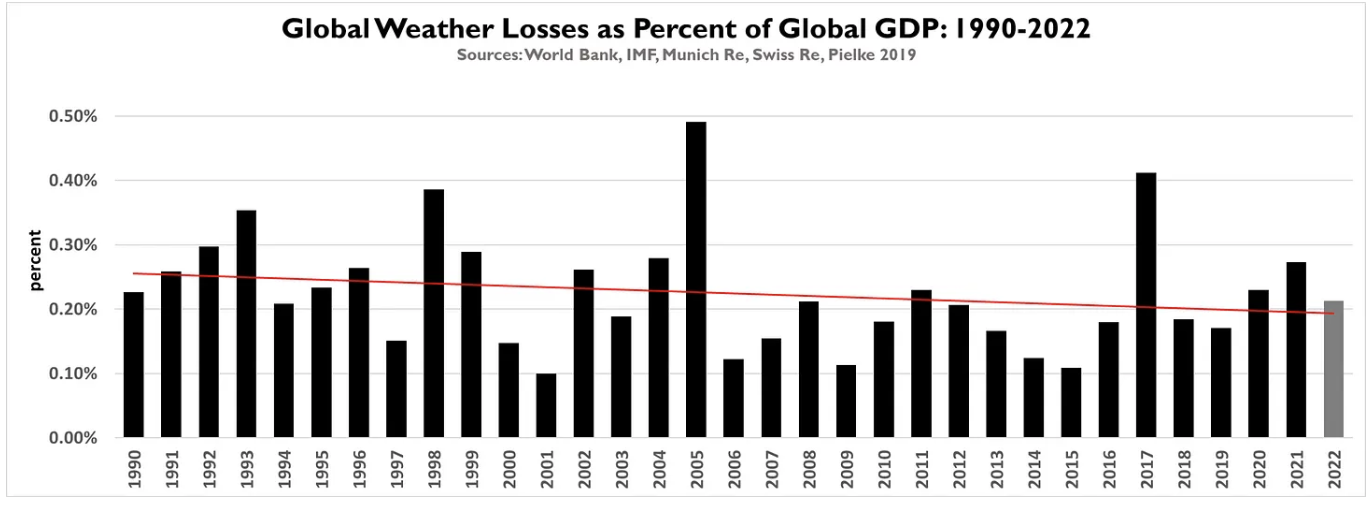 Also showing no increase (in fact a decline) is the numbers of recorded climate disasters.
 Perhaps Mr Bowen wished to close his mind to evidence that is contrary to catastrophist notions. After all, he can use such notions, based on synthesised and random evidence, to claim to a gullible electorate that these are outcomes of delinquency on the part of his political opponents. Of course, not only is there no evidence of CO2 emissions causing climate calamity, but Australia’s contribution of one per cent of human emissions is trivial – even eliminating the 20 per cent from the combined EU/US/UK would make no difference.
CSIRO is ill-equipped as an institution to assemble costs of different electricity supply systems and this is evident from its report on the matter. Their report, in putting wind and solar as the cheapest source of power, does so without wondering why, if this is the case, these sources still require subsidies of $40-60 per MWh. That level of subsidy was the full cost of electricity generation under Australia’s coal-gas-hydro system that prevailed until a few years ago. The subsidies, with their $7 billion annual cost to taxpayers and electricity consumers, undermined the previous commercial market-based system, bringing a threefold increase in costs.
CSIRO’s estimates for different electricity sources are based on totally unrealistic assumptions. These include:
Perhaps Mr Bowen wished to close his mind to evidence that is contrary to catastrophist notions. After all, he can use such notions, based on synthesised and random evidence, to claim to a gullible electorate that these are outcomes of delinquency on the part of his political opponents. Of course, not only is there no evidence of CO2 emissions causing climate calamity, but Australia’s contribution of one per cent of human emissions is trivial – even eliminating the 20 per cent from the combined EU/US/UK would make no difference.
CSIRO is ill-equipped as an institution to assemble costs of different electricity supply systems and this is evident from its report on the matter. Their report, in putting wind and solar as the cheapest source of power, does so without wondering why, if this is the case, these sources still require subsidies of $40-60 per MWh. That level of subsidy was the full cost of electricity generation under Australia’s coal-gas-hydro system that prevailed until a few years ago. The subsidies, with their $7 billion annual cost to taxpayers and electricity consumers, undermined the previous commercial market-based system, bringing a threefold increase in costs.
CSIRO’s estimates for different electricity sources are based on totally unrealistic assumptions. These include:
Also showing no increase (in fact a decline) is the numbers of recorded climate disasters.
Perhaps Mr Bowen wished to close his mind to evidence that is contrary to catastrophist notions. After all, he can use such notions, based on synthesised and random evidence, to claim to a gullible electorate that these are outcomes of delinquency on the part of his political opponents. Of course, not only is there no evidence of CO2 emissions causing climate calamity, but Australia’s contribution of one per cent of human emissions is trivial – even eliminating the 20 per cent from the combined EU/US/UK would make no difference.
CSIRO is ill-equipped as an institution to assemble costs of different electricity supply systems and this is evident from its report on the matter. Their report, in putting wind and solar as the cheapest source of power, does so without wondering why, if this is the case, these sources still require subsidies of $40-60 per MWh. That level of subsidy was the full cost of electricity generation under Australia’s coal-gas-hydro system that prevailed until a few years ago. The subsidies, with their $7 billion annual cost to taxpayers and electricity consumers, undermined the previous commercial market-based system, bringing a threefold increase in costs.
CSIRO’s estimates for different electricity sources are based on totally unrealistic assumptions. These include:
- Assigning a ‘sovereign risk’ premium that doubles the cost of financing coal generators.
- Understating coal generators’ ‘capacity factor’, their availability to supply, and hence the overhead costs of their operations.
- Understating the additional cost of transmission for wind (the lower power density of which makes it three times more expensive to transmit).
- Understating the cost of ‘firming’ inescapably variable wind and solar with readily available alternatives; this requires a full duplication of the solar/wind capacity.
- Making heroic assumptions of advances in renewables technology.
- Overstating the life and understating the progressive deterioration of wind/solar facilities.