When Kermit the Frog told us in 1971 that it’s not easy being green it was meant as a plea for diversity, describing, as those lyrics so movingly do, the obstacles to social acceptance then faced by American amphibians – even those blessed with the power of speech and massive TV ratings. But before the song could be used to call out prejudice against other skin colours it was repurposed to a very different cause. Because 1971 was also the year that a mob of smelly, whale-loving, bomb-hating hippies calling themselves Greenpeace kicked off an international movement which would eventually rival racial discrimination as the left’s biggest issue. And before Big Issue had become the masthead of an inner-city lefty freesheet, sub-editors of real newspapers had discarded the hyphen-prone ‘environmentalist’ in favour of the more headline-friendly ‘green’. By this time the movement had also discarded, as its figurehead, a portly, election-losing, middle-aged American in favour of a diminutive, hearts-winning Swedish Gen Zedder, and pretty soon green was more than a colour and a cause; in many western democracies it was also the name of a political party. Today, being green in those countries is very easy indeed – not least because choosing not to be can make your life quite difficult. There are few more effective ways to declutter your social calendar and limit your career opportunities than to out yourself as a climate change sceptic or confess to having (and what red-blooded Speccie reader can honestly deny having?) a nostalgic fondness for coal. Conversely, nothing will boost your chances of getting a research grant from a reputable university or a business start-up loan from a high street bank like inserting the word green into your thesis title or application.
It’s too soon to say if any lasting damage will be done to the global environmentalist movement by the collapse of the green hydrogen industry. But given the high profile of its advocates in Australia, our Prime Minister amongst the most vocal of them, it will certainly not help to persuade many fossil fuel fence-sitters here to get with the renewables program. Indeed Australians who were sufficiently seduced by the hype which Fortescue chief Andrew Forrest started spouting three years ago – and which has been unquestioningly echoed by left-leaning media ever since – to invest in any of the companies which followed Fortescue’s lead, must today be thinking about hydrogen in the same way that people thought about it in the days following the Hindenburg disaster. Despite being a gas with no detectable odour, it will be on the nose for Australian investors for at least the foreseeable future, and when the post-mortem is made public, and everyone else sees how little real due diligence preceded the commitment of all those billions, not to mention the endorsement of all those public figures, it will be less a case of ‘Oh the humanity’ than one of ‘Oh the insanity’.
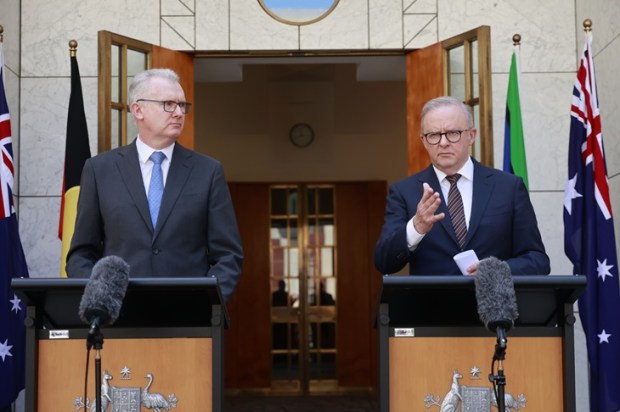
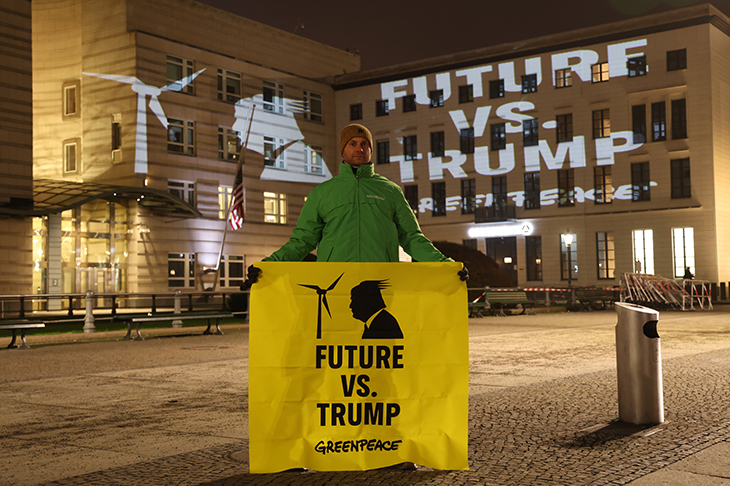
Fortunately, most Australians are too poor to be directly impacted by the green hydrogen crash, so Mr Albanese’s support for it will probably not be a deciding factor in the federal election. But like the Voice to Parliament, green hydrogen is a bien-pensant bandwagon which he and Mr Bowen would have been well advised to let get a bit closer before sticking their thumbs out. By mid-2024 the relentless salami slicer activism of the green lobby had reduced the resistance of right-of-centre parties to net zero to the point where most of them accepted that despite a Kosciuszko of evidence to the contrary, carbon is indeed a threat to – rather than a prerequisite of – life on earth, so, yes, something probably should be done about it. To put it another way, ever since Greta accused us of stealing her dreams and her childhood we have all been Kermits in the climate casserole. But the water surrounding us has been heated so slowly, and the other frogs have made so little noise about it, that we’ve adapted rather than objected. If Kamala Harris was in the White House today, Mr Albanese’s election promises would no doubt require Australians to continue sitting in increasingly uncomfortable silence for at least another three years. But Donald Trump’s decision to withdraw the US from the Paris Agreement on his first day in office has turned the heat up to 11. And that’s given frogs all over the world a very simple choice; jump out or croak.
Got something to add? Join the discussion and comment below.
You might disagree with half of it, but you’ll enjoy reading all of it. Try your first month for free, then just $2 a week for the remainder of your first year.